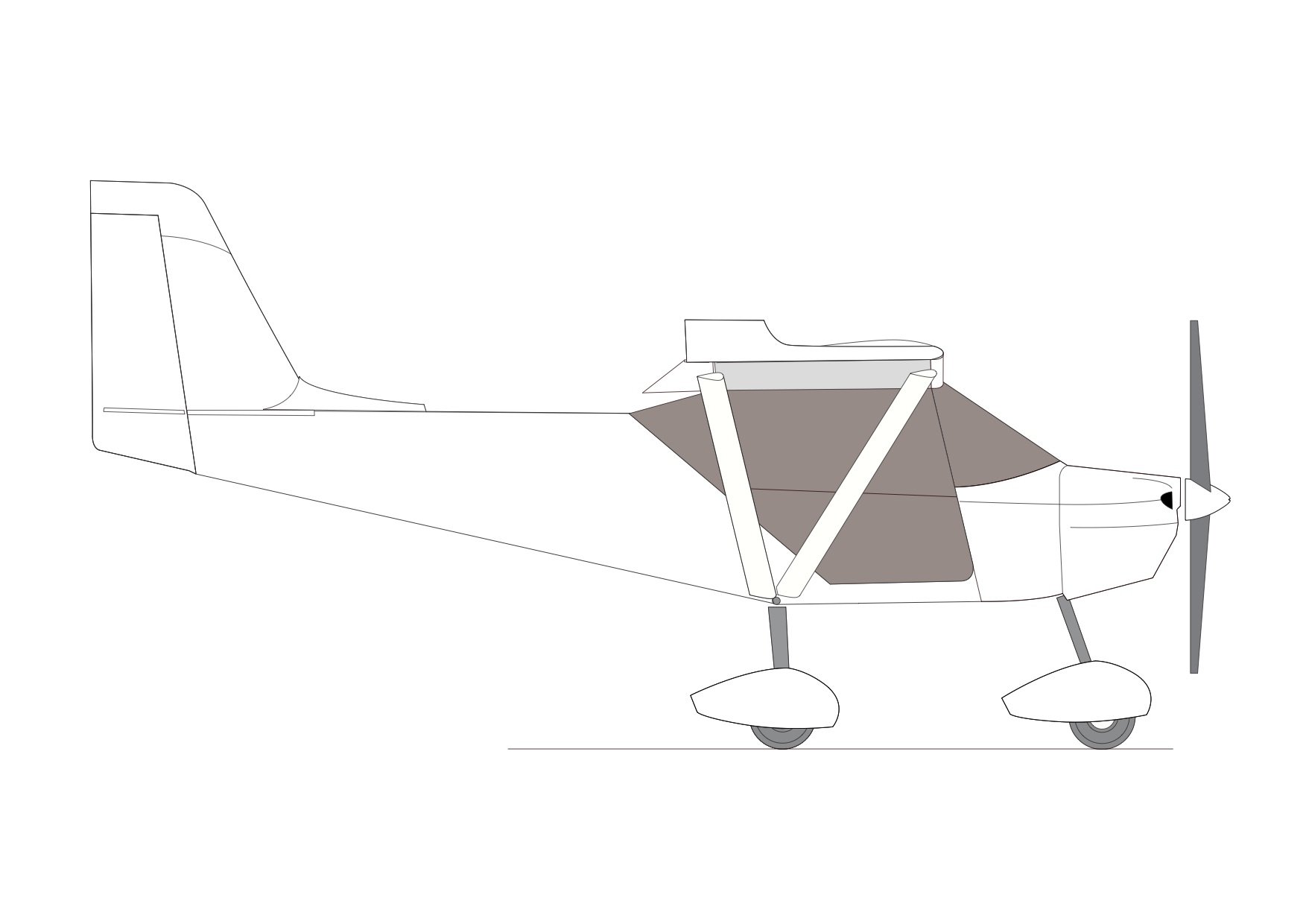
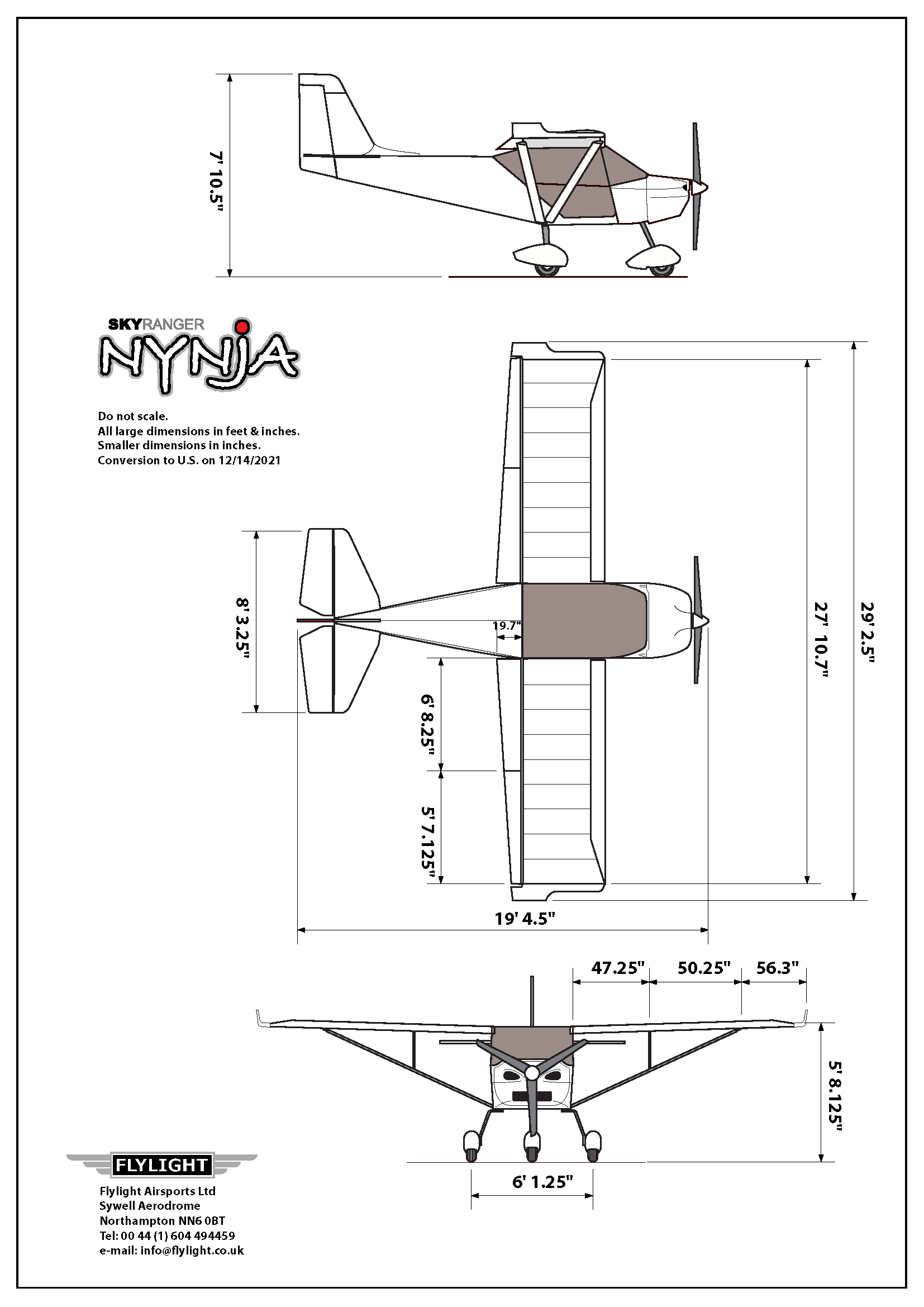
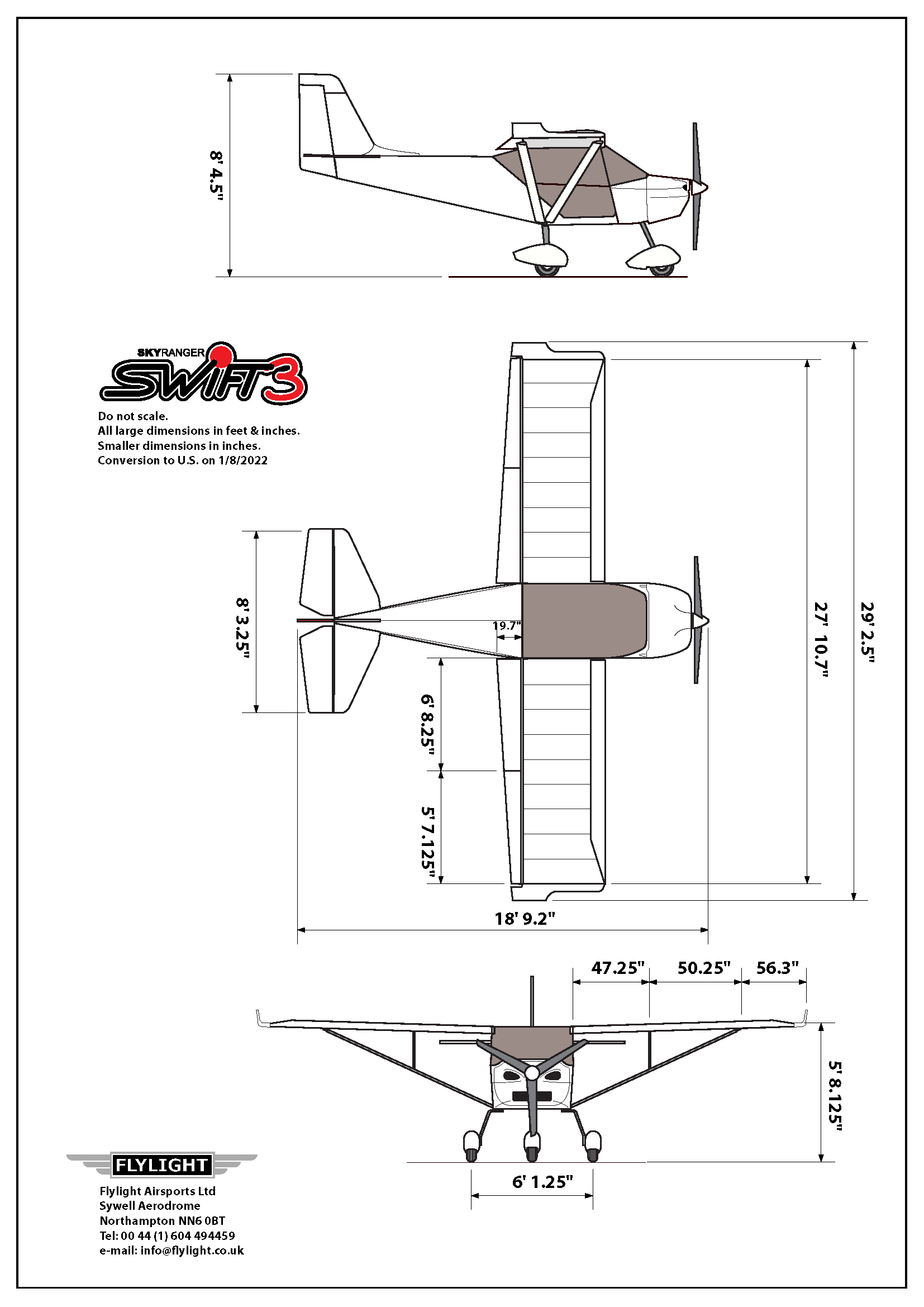
The obvious external difference between the Swift and Nynja is the fuselage. The Swift has a fabric-covered fuselage whereas the Nynja has sleeker lines with the fuselage covered in a smooth, modular composite skin. The rear fuselage is a different shape too — which allows for the incorporation of a glazed rear window area.
This gives the aerodynamic and aesthetic advantages of a fully composite aircraft, but without the drawbacks of high manufacturing cost and difficult repair.
The nonstructural modular panels can easily be repaired or replaced in the event of surface damage. The underlying structure of triangulated pin-jointed straight tubes provides excellent crashworthiness and is easy to assess, and repair by component replacement. This is a major practical advantage compared to all-composite, or built-up sheet metal construction.
The Nynja has also been subjected to a detailed aerodynamic cleanup, it has a longer sleeker nose and more raked windscreen, and a smoother transition to the rear fuselage area minimizing drag. Further detail enhancements include tailplane and fin leading edge fairings, and strut end and cable exit fairings. The wing section has also been modified and now has profile stabilization blocks inside the wing. Composite wing tip fairings are standard on the Nynja and feature winglets, which reduce drag and also lower the stall speed.
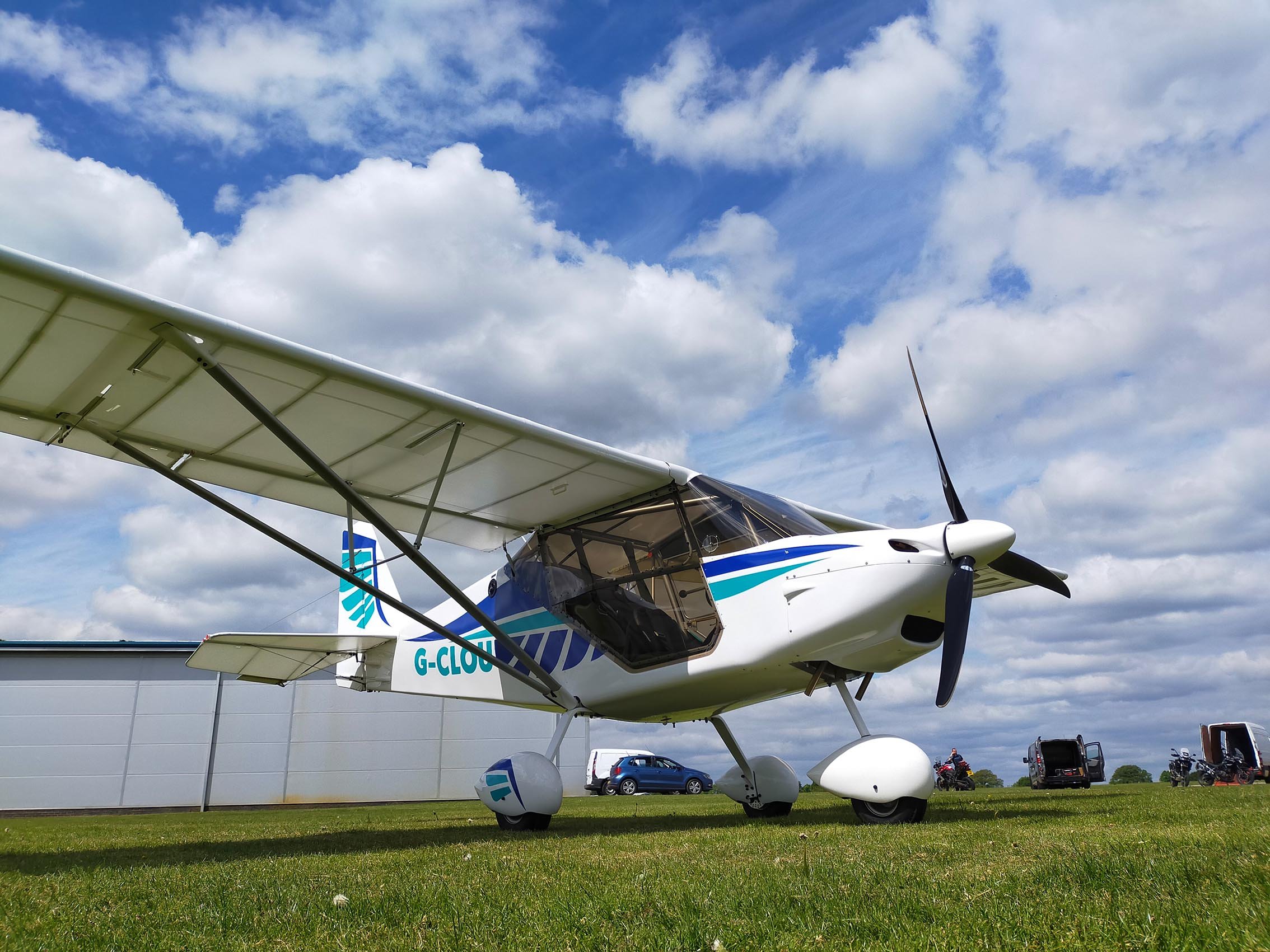
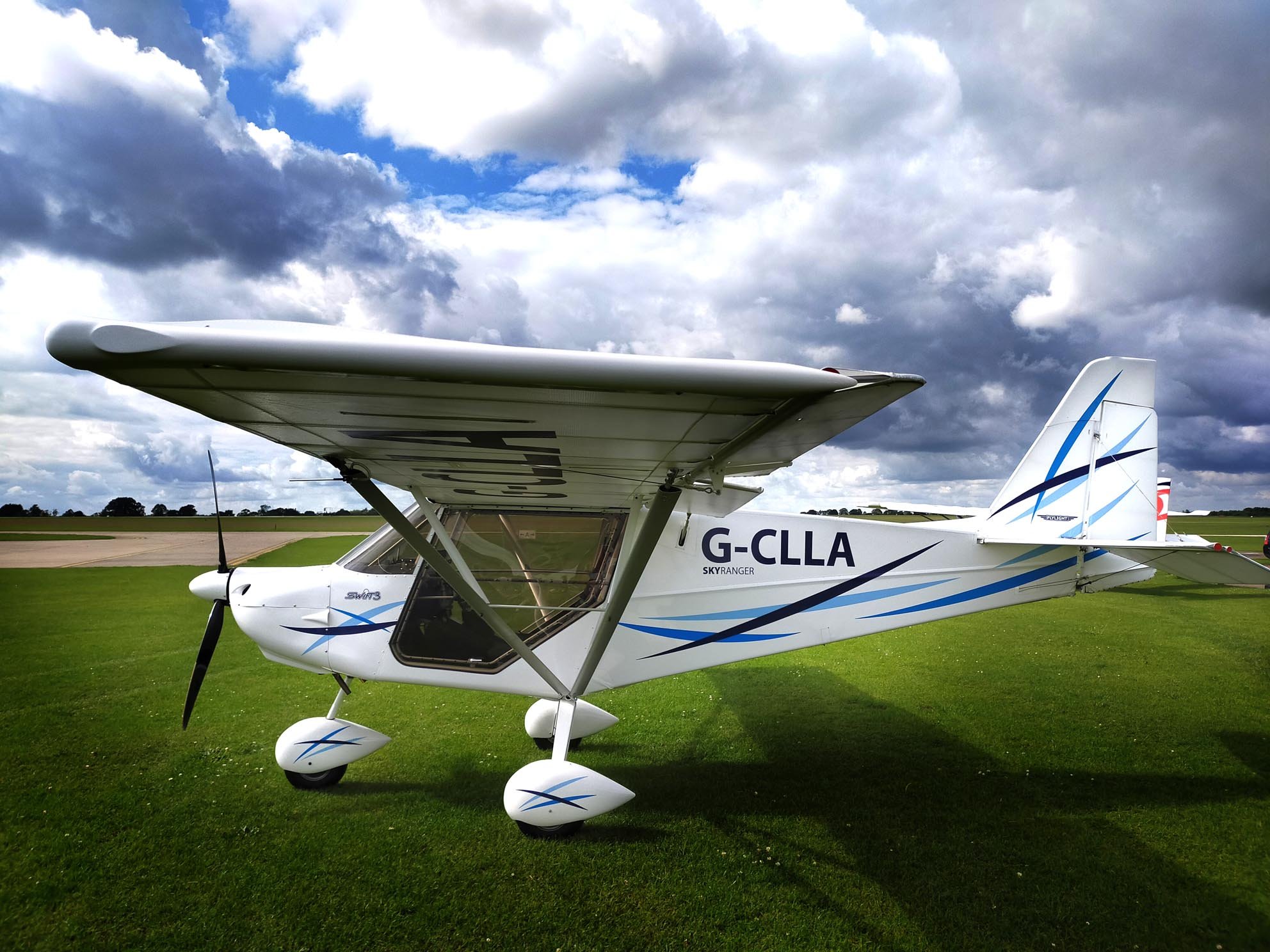
The SkyRanger family is manufactured in Ukraine, by ex-Antonov engineers to very high standards. The fuselage design is patented, and construction features are:
The undercarriage is particularly strong — the SkyRanger being designed for 'off the beaten path' operation.
Covering is with pre-made sewn fabric envelopes, which quickly slide into position and tension. No traditional smelly and messy doping and painting required!
Fiberglass panels are used for cowlings (and total fuselage enclosure for the Nynja model). These are supplied finished in white, and also require no painting.
Advantages of this construction system include: